In Print

A knife I own hand crafted by the late Phill
Hartsfield. He is a renowned and influential bladesmith and armorer,
and made some of the highest priced knives sold. Included here for
metaphorical illustration since omission is used as a weapon.
Omitted or Missing Pieces
On The Morality of Omission, and The Relationship to Mental Productions, Behavior, and Ethics
Book and Journal of Mattanaw
Volume I, Book I, §iv, Draft
Publisher: PlaynText, Tempe, Arizona
Publisher
Copyright © 1984 to Present by Mattanaw. All Rights Reserved.
Publisher: PlaynText Location: Tempe, Arizona
PlaynText is dedicated to the publication of high quality journal publications issued in premium book format, as book/journal hybrids. Each publication is intended to be an illustration, potentially, of the maximum and least-inhibited use of free thought and free expression.
Copying, distributing, plagiarising, processing, storing, and serving the contents of this book is a violation of intellectual property, unless otherwise indicated by the copyright holder elsewhere, as it relates to this specific issue of the Book and Journal of Mattanaw. For permission to use any contents of this book, please contact the author at http://mattanaw.org/com.html.
Published by PlainText/PlaynText, Inc, companies wholly owned by the author, Mattanaw, Mattanaw, (formerly “Christopher Matthew Cavanaugh”). Mattanaw is a legal name and not a pseudonym. While owned by Mattanaw, the Book and Journal is published by PlainText/Playntext, a large organization, comprised of many contributors, at a substantial investment. It is not self-published.
Printed in Tempe, Arizona, in the United States of America.
Published and printed by PlaynText, an imprint of PlaynText, Inc.
The Publisher is not responsible for the content of others produced on websites, applications, social media platforms, or information related storage or AI systems. The processing of this Book and Journal by an AI System is prohibited.
Library of Congress Control Number (pending)
Library of Congress ISSNs: 2998-713X (Online), 2998-7121 (Print)
Academics and Peer Review
The Book and Journal of Mattanaw is an Academic Journal having a comprehensive peer review process to produce high quality scholarly articles. This peer review process is more and not less advanced than the peer review process of other major scholarly journals.
Several rounds of peer review are conducted for each issue, by a number of external academics and industry professionals, using the double-blind approach and other methodologies, before a book issue is released.
The process is well defined, scholarly, better than industry standard, and partly proprietary due to the innovativeness of the approach. However, parts of the confidential approach are standardized, and therefore already know to the public. The smaller interior peer review process is an open and transparent process that can be reviewed by the readership and members of the public, for inquiry and comment. The remainder is temporarily proprietary and confidential.
This process is more stringent and more open than many similar peer review processes due by our additional process expertise typically not existing with other publishing companies. Publishing companies often do not have experience in business process, software process, and other organizational workflows. This organization has expertise in this domain that is consummate by comparison to what is available at other publishers, and it may be the case, that such publisher’s would rely on the expertise of this organization. The peer review process utilizes a standard double-blind peer review but this is merely incorporated into the larger process which has greater complexity, and methodical sophistications missed by other approaches. Therefore it is an enlarged peer review process of higher quality. The peer-review process itself is also subject to periodic improvement, quality testing, and scientific debugging and examination.
The total review process, that is inclusive of peer review, has a very high requirement for making revisions for final release in book-issue form, and drafts are rejected continuously until they reach a level of quality needed. Once they reach the quality required, if ever, they are accepted. The rejection rate is greater than with a standard academic journal at greater than 99 percent.
To be as transparent as possible, the total review process includes also public review of all materials in a draft state. Instead of hiding materials and keeping them unpublished until finally getting through a gate-keeping system, that finally publishes a “finished” document, showing nothing of idea development and editorial refinement, this journal shows all the advancements from early document drafts exhibited within bare almost template-like documents, through to the review process, until release in book-issue form. At all stages from the initial ideation to the initial document and web/print publication, the public is permitted full visibility into the process. It is an open process, as is expected by science, and not a closed process like business journals, sometimes called “academic or scholarly” journals.
The articles produced by the Book and Journal are not constrained to a specific audience, but instead uses a more inclusive, less discriminative approach, more flexibly communicative, while maintaining within a more sophisticated presentation, the expected presentability of academic readers and scholars. The content however, is not expected to be entirely unreachable and inaccessible to public audiences that are given access to the reading materials. This may be contrasted with a non-inclusive peer review system, that is discriminatory and exclusive of readers forcing submitters to prepare works for release in for-pay only retrieval systems.
In some cases, book issues have content that was syndicated to other Journals, meaning in addition to the process used by this journal, content has also been peer reviewed by the editorship, boards, or peer review staff of other journals. This makes the peer-review process of content for this journal especially stringent, and of course, if published elsewhere, it was deemed of good quality by one or more additional organizations.
Those texts that are transparently in a draft state for readers to see development in progress have not yet entered the peer review process, but enter the process at the time they go into post-draft, print issue candidacy. Once the candidate issue is approved, it is released as a standard book issue. All those texts marked with numberings, for book, issue, edition, and not only “draft” are those that have undergone the peer review process.
Additional questions for those interested in the peer review process can using the communications form in Communications.
Author
The Author and Editor-in-Chief, by his enterprise client’s headquarters in San Diego, California
Artist/Author: The Honorable Dr.9 Mattanaw, Christopher Matthew Cavanaugh, Retired
Interdisciplinarian with Immeasurable Intelligence. Lifetime Member of the High Intelligence Community.6
- Masters Business & Economics, Harvard University, Studies Completed
- Attorney, Pro Se, Litigation, Trial, Depositions, Contracts (E.g. State of Alaska v. Pugh, et. al., Alaska Superior and Supreme Courts)4
- B.S. Psychology, University of Maryland, 4.0, Summa Cum Laude1
- B.S. Computer & Information Science, University of Maryland, 3.91, Magna Cum Laude2
- B.A. Philosophy, University of Maryland.3
- G.E.D., State of Maryland, Montgomery County, 1999.
- Lifetime Member of the High Intelligence Community, Mensa Lifetime Member

Former Chief Architect, Adobe Systems
Current President/Advisor, Social Architects and Economists International.
CEO PlaynText | CEO PlainText
Contact:
Resumé
Contents
Edit History
- Updated: Friday, February 17th, 2023, at 4:37 PM New Plymouth, NZ Time
- Draft Created: Tuesday, June 20th, 2022, at 9:53 PM Alaska Time
Introduction
Since this is a book live in progress, the reader should anticipate missing pieces throughout the site resulting from omissions made by the author, either to disinclude those pieces initially as a matter of priority, or because certain pieces have not yet been written or transcribed from handwritten sources, incomplete also as a matter of priority.
The priority of this work is to publish rapidly, even in complete and unedited works. This is different to the model of publication to which the author has worked as Chief Architect and Advisor, for various large enterprises, which requires a much more lengthy process of editing, verification, proofreading, and content management, and page testing. This website earlier had a staged portion which had the purpose of initial review prior to making a final published page, which is what modern websites do, almost in call cases. However, the author being an architect of such systems including the present system has decided to choose to publish more rapidly for benefits to the author, but also to gain information on the benefits and detriments of transparency of process revealed to the reader.
The process of writing a work that is initially incomplete is concealed from audiences and consumers.
Likewise the process of creating final productions, artistic creations, films, magazines, music, and so on are concealed until finished, which keeps potential learners outside of the work done, so they are unable to learn from observation.
The author is more concerned about transparency and sharing a living mind, and an actively growing work, than concealing from the reader how he did so in a sometimes masterful way, and usually in a self-learning way.
Another limitation of trying to have a complete work in advance is that for a book or large journal such as this, it may take many years and decades before anything can be shared. Already this work has taken 20 years. It is believed that it will take at least another five before it resembles a really coherent complete piece, closer to what the author is envisioning, or if not already envisioned, closer to what would be satisfying for commitment.
The structure of this work is still being created, however the larger framework is in place, and needs time for expansion and filling gaps. Initially readers will find that some sections appear incomplete or are lacking parts that are promised in introductions.
This does not imply there are not pieces of writing that will appear later, that were not considered earlier, and this is a message of the work Thoughtstream, which is a work of developing creativity.
There is a doneness to this work which was realized several years ago, and much work that will be included here has already been thought in some depth, or involves work already complete, that requires transcription (from handwritten sources). There are planned works that fit into the framework and envisioned structure.
The size of the vision of this publication and the size of its existing structure, should give the reader some indications that omissions would be unavoidable, given the time to complete writing and complete edits.
Since it is growing, there may be good reason for periodically checking back. It is expected that many articles, sections, videos, and media will be added frequency.
There is also the realization, that was just recollected by the author, that death could easily occur in advance of completion. Perhaps more should be included here on what omissions might mean if the work is not finished. Briefly for now it can be said that the author considers this work a mandala, and despite all the effort put in, could discard it immediately, and not cling to it unnecessarily, given it would likely vanish in the future in any case, and it is not something is ever totally finished, despite aforementioned donenesses that exist.
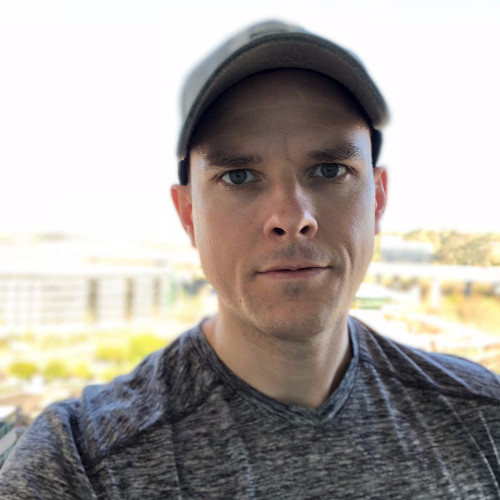
Mattanaw I., formerly "Christopher Matthew Cavanaugh"
I am a retired executive, software architect, and consultant, with professional/academic experience in the fields of Moral Philosophy and Ethics, Computer Science, Psychology, Philosophy, and more recently, Economics. I am a Pandisciplinarian, and Lifetime Member of the High Intelligence Community.
Articles on this site are eclectic, and draw from content prepared between 1980 and 2024. Topics touch on all of life's categories, and blend them with logical rationality and my own particular system of ethics. The common theme connecting all articles is moral philosophy, even if that is not immediately apparent. Any of my articles that touch on "the good and virtuous life" will be published here. These articles interrelate with my incipient theory of ethics, two decades in preparation. This Book and Journal is the gradual unfolding of that ethic, and my living autobiography, in a collection of individual books that fit into groups of book collections.
This Book and Journal is already one of the largest private websites and writings ever prepared, at nearly 1 million words, greater than 50,000 images and videos, and nearly one terabyte of space utilized. The entire software architecture is of my creation. Issues of the book for sale can be found under featured. These texts are handmade by myself, and are of excellent quality, and constitute the normal issues of my journal that can also be subscribed to. The entire work is a transparent work in progress. Not all is complete, and it will remain in an incomplete state until death.
I welcome and appreciate constructive feedback and conversation with readers. You can reach me at mattanaw@mattanaw.com (site related), cmcavanaugh@g.harvard.edu (academic related), or christopher.matthew.cavanaugh@member.mensa.org (intelligence related), or via the other social media channels listed at the bottom of the site.